Blog

unnamed 2026 01 14t110701.504

Beyond Bits: A Beginner’s Guide to Qubits, Superposition, and Entanglement

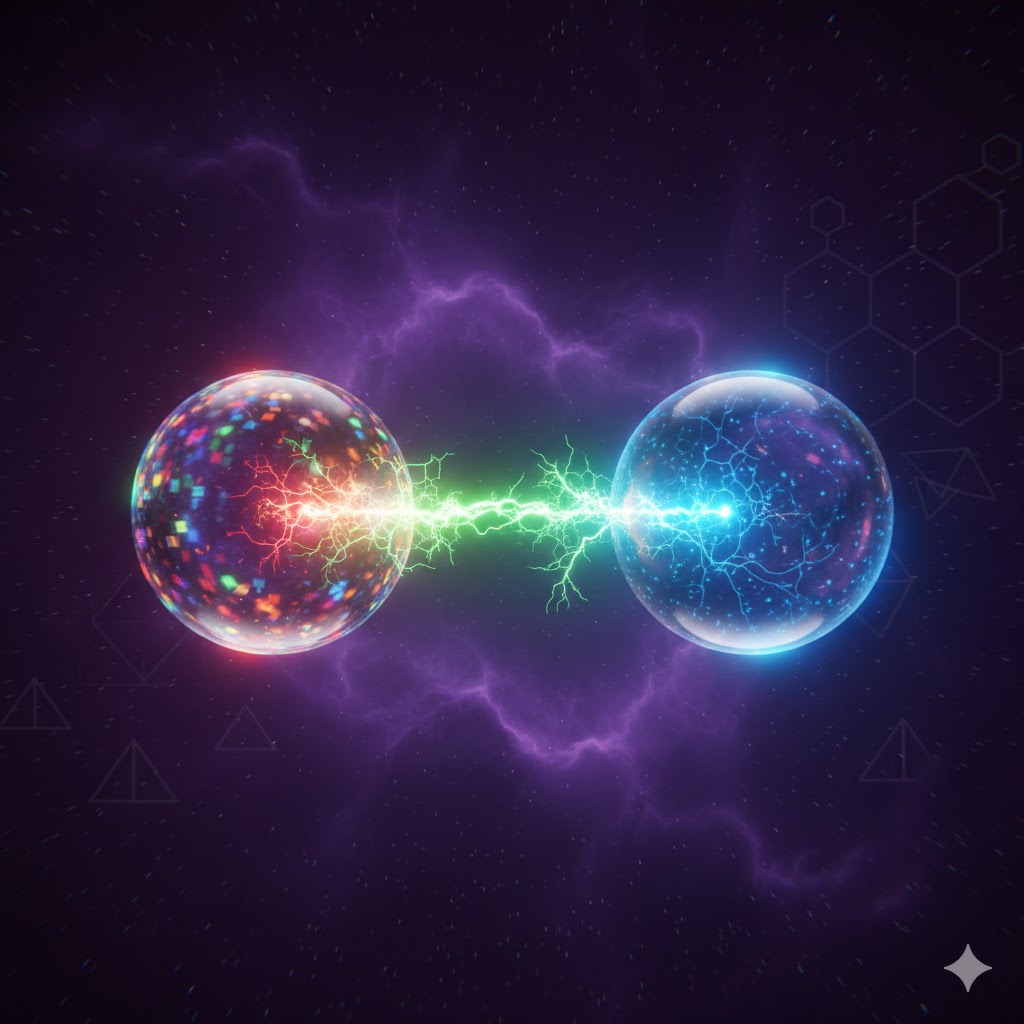
To the average person, Quantum Computing sounds like a mix of magic and high-level mathematics. However, at its core, it is simply a new way of processing information. To understand why Qbits is so focused on this future, we need to look at the three “Superpowers” that make quantum computers different from the laptop or smartphone you are using right now. 1. The Qubit: The Power of “And” In classical computing, the smallest unit of information is a Bit, which is either a 0 or a 1. It’s binary—like a coin that is either Heads or Tails. In quantum computing, we use Qubits. A qubit doesn’t have to choose. It can exist in a state of both 0 and 1 at the same time. This is the fundamental building block that allows quantum computers to hold significantly more information than classical ones. 2. Superposition: The Spinning Coin How can something be two things at once? Think of a coin spinning on a table. While it is spinning, is it Heads or Tails? It’s actually a blur of both. In quantum terms, this is called Superposition. A quantum computer uses this “blur” to explore every possible solution to a problem simultaneously. While a classical computer checks one door at a time to find a exit in a maze, a quantum computer can “smell” all paths at once and find the exit instantly. 3. Entanglement: The “Spooky” Connection This is where things get truly mind-bending. Entanglement is a phenomenon where two qubits become linked. No matter how far apart they are—even if they are on opposite sides of the universe—what happens to one qubit instantly affects the other. Albert Einstein called this “spooky action at a distance.” For businesses, this means a level of synchronized data processing and communication speed that was previously thought to be physically impossible. Why Should You Care? You might be wondering, “Why does a spinning coin or ‘spooky’ connection matter for my company?” It matters because these three concepts allow us to solve Optimization Problems. Whether it’s finding the perfect chemical compound for a new battery or the most efficient flight path for a global airline, the combination of Superposition and Entanglement allows us to process calculations that would take a regular computer billions of years. Conclusion: The New Language of Logic Quantum Computing isn’t just “faster” computing; it is a entirely different language of logic. By moving Beyond Bits, we are opening a door to a reality where the most complex problems in human history—climate change, terminal diseases, and global poverty—can finally be solved.

Beyond Bits: A Beginner’s Guide to Qubits, Superposition, and Entanglement Read More »
unnamed 2026 01 14t110100.007

The Quantum Leap: What Quantum Computing Means for Your Business

In today’s digital era, data is the new gold. However, the volume of data has become so massive that even our most powerful classical supercomputers are struggling to process it efficiently. This is where Quantum Computing enters the frame. For most business leaders, Quantum Computing sounds like “Science Fiction.” But the reality is that we are on the verge of a computational revolution that will redefine how industries operate, from logistics to drug discovery. Classical vs. Quantum: What is the Difference? Traditional computers operate on Bits—represented as either a 0 or a 1. Think of it like a light switch that is either ON or OFF. Quantum computers, however, use Qubits. Thanks to a phenomenon called Superposition, a qubit can exist as both a 0 and a 1 simultaneously. Furthermore, through Entanglement, qubits can be linked together, allowing them to calculate vast amounts of data at speeds that were previously unimaginable. To put it in perspective: a calculation that would take a classical supercomputer 10,000 years to complete can be solved by a quantum processor in just a few minutes. How Will This Impact Your Business? 1. Supply Chain & Logistics Optimization If your business involves complex delivery routes or global shipping, Quantum Computing is a game-changer. It can scan millions of variables (traffic, weather, fuel, port delays) simultaneously to find the absolute most efficient route, saving companies billions in operational costs. 2. Financial Risk & Fraud Detection Banks and investment firms can use quantum algorithms to run highly accurate market simulations and detect fraudulent patterns in real-time with much higher precision than current AI models. 3. Healthcare & Accelerated Drug Discovery Developing new life-saving drugs often takes over a decade because simulating molecular interactions is incredibly complex for classical hardware. Quantum computers can simulate these molecules at the atomic level, potentially reducing the time to bring a new drug to market from years to months. Is Your Business “Quantum-Ready”? The “Quantum Leap” isn’t happening in a vacuum. Tech giants like Google, IBM, and Microsoft are investing billions to make quantum-as-a-service a reality. As a business leader, here are three steps you should take today: Audit Your Security: Quantum computers will eventually be able to break traditional encryption. Look into “Quantum-Resistant” security protocols. Move to the Cloud: Most quantum power will be accessed via the cloud. Ensure your data infrastructure is modern and scalable. Partner with Experts: Stay connected with platforms like Qbits to understand how emerging tech can be integrated into your specific niche. Conclusion The Quantum Leap won’t happen overnight, but it is a gradual shift that is already picking up speed. The businesses that take the time to understand this technology today will be the market leaders of tomorrow.

The Quantum Leap: What Quantum Computing Means for Your Business Read More »

unnamed 2026 01 13t200640.494

The Quantum Leap: 5 Essential Pillars of Qubits

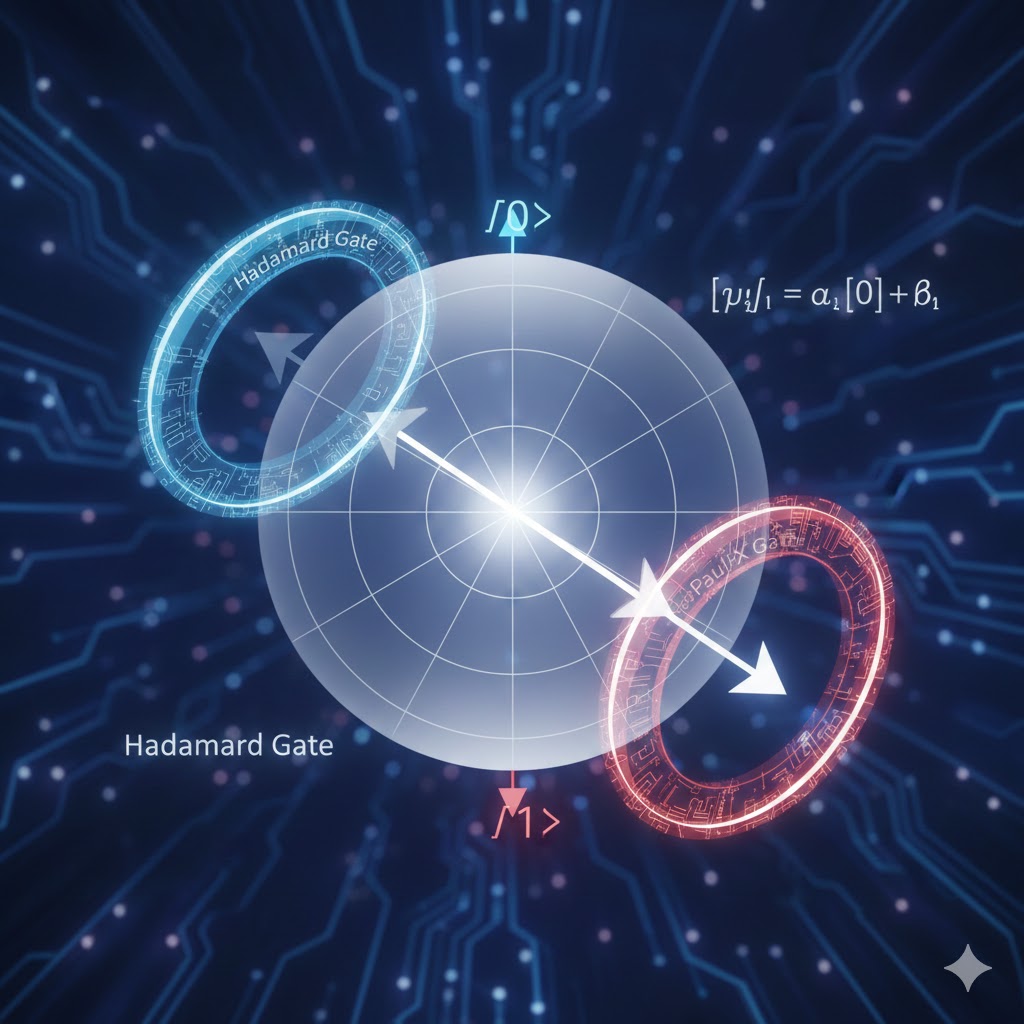
In the world of classical computing, everything boils down to a bit—a simple switch that is either 0 or 1. But we are entering the era of the Qubit (Quantum Bit), the fundamental building block of quantum computers. Unlike classical bits, qubits follow the strange and beautiful laws of quantum mechanics. Here are five key topics you need to know to understand how qubits are changing the future of technology. 1. Superposition: Being in Two Places at Once The most famous trait of a qubit is superposition. While a classical bit is like a coin lying flat on a table (either heads or tails), a qubit is like a coin spinning on its edge. It exists in a mathematical state of both 0 and 1 simultaneously. This allows quantum computers to process a massive amount of data at once. If you have two classical bits, they can represent one of four combinations (00, 01, 10, or 11). Two qubits, however, can represent all four combinations at the same time. 2. Entanglement: The “Spooky” Connection Albert Einstein famously called entanglement “spooky action at a distance.” When two qubits become entangled, they become permanently linked, regardless of how far apart they are. If you measure one entangled qubit and find it is in state “0,” its partner will instantaneously reflect a corresponding state, even if it’s on the other side of the universe. This synchronization allows qubits to work together in a highly coordinated fashion, leading to exponential increases in computing power. 3. Quantum Decoherence: The Fragility of Magic If qubits are so powerful, why don’t we have quantum laptops yet? The answer is decoherence. Qubits are incredibly sensitive. The slightest vibration, change in temperature, or electromagnetic wave can cause them to lose their quantum state and “collapse” into a regular 0 or 1. This is why many quantum computers are kept in dilution refrigerators that are colder than outer space. Protecting qubits from the “noise” of the outside world is the biggest engineering challenge of our time. 4. Types of Qubits: How do we build them? Scientists are still racing to find the “perfect” way to create a qubit. There isn’t just one type; different companies use different physical systems: Qubit Type Description Main Player Superconducting Uses tiny loops of superconducting wire at ultra-cold temps. Google, IBM Trapped Ions Uses individual atoms held in place by electromagnetic fields. IonQ, Quantinuum Photonic Uses particles of light (photons) to carry information. PsiQuantum Topological A theoretical qubit that is more stable due to its “shape.” Microsoft 5. Quantum Gates: Programming the Unthinkable In a normal computer, logic gates (AND, OR, NOT) manipulate bits. In quantum computing, we use Quantum Gates. These gates rotate the state of a qubit on what is called a Bloch Sphere. Because qubits work with probabilities, quantum programming isn’t about getting a single “right” answer through a linear path; it’s about choreographing interference patterns so that the wrong answers cancel each other out and the right answer “appears” with high probability at the end of the calculation. $$|psirangle = alpha|0rangle + beta|1rangle$$ Conclusion We are currently in the “NISQ” era (Noisy Intermediate-Scale Quantum), where qubits are still a bit messy and prone to error. But as we master these five areas, we move closer to solving problems in medicine, climate science, and encryption that are currently impossible for any supercomputer on Earth.  

The Quantum Leap: 5 Essential Pillars of Qubits Read More »